1 Building an 8-bit breadboard computer!
Ben Eater's playlist building an 8-bit computer on breadboards from basic logic chips, widely recommended for understanding how a processor works from the ground up.
Channel
28 recommended videos. Channel on YouTube
Ben Eater's playlist building an 8-bit computer on breadboards from basic logic chips, widely recommended for understanding how a processor works from the ground up.
Entry point to Ben Eater's breadboard computer series, linked when someone asks how a CPU, registers or clock cycles work at the hardware level.
Ben Eater builds basic logic gates from transistors, resistors and LEDs on a breadboard; beginners often follow it, then ask how the XOR circuit works.
Ben Eater programs a parallel EEPROM by hand and uses it as a lookup table to drive a seven-segment display in place of discrete logic.
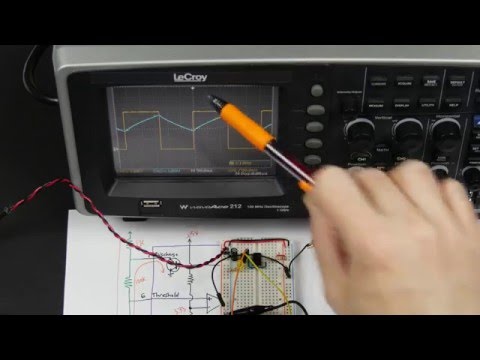
Ben Eater explains the inner workings of the 555 timer and builds an adjustable astable clock for his 8-bit computer; popular with beginners following along on breadboards.
Ben Eater builds the logic that turns a 4-bit value into seven-segment digits using plain gates, praised as a clear introduction to combinational design.
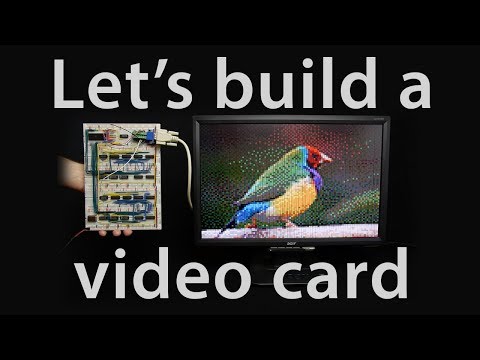
First part of Ben Eater's series building a VGA video card from logic chips on a breadboard; recommended for understanding VGA timing and the effort involved.
Ben Eater captures a USB keyboard's signals on an oscilloscope and works through the protocol manually, recommended to anyone trying to understand USB at wire level.
Ben Eater starts building a 6502 computer on breadboards, single-stepping the clock to watch the bus; a frequent starting point for people building their own.
Ben Eater builds a JK flip-flop and shows why it works only intermittently because of a race condition, cited to settle questions about his earlier latch schematic.
Ben Eater's explanation of how a bipolar transistor works, repeatedly offered as a very helpful way to grasp the basics.
First of three parts on control logic for Ben Eater's 8-bit computer, showing how control lines and microcode steps execute an instruction over several clock cycles.
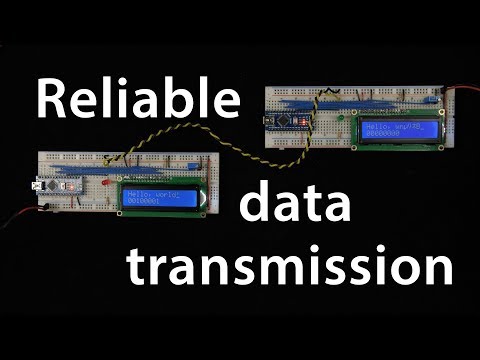
Ben Eater video on sending data reliably from one Arduino to another, which a couple of viewers praise as an excellent and detailed explanation.
Warmly recommended for learning how a processor works from the ground up by building a simple computer from scratch and seeing code run on real hardware.
Hidden gemBen Eater's breadboard work, linked mainly for the section comparing good and cheap solderless breadboards and for tidy wiring technique.
Part of Ben Eater's breadboard 8-bit computer, testing the register module with LEDs on the bus; often cited when builders hit marginal logic levels.
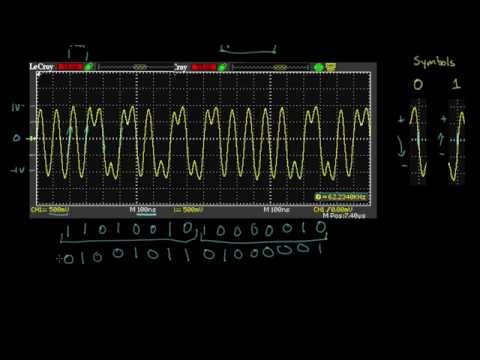
Ben Eater probes a 10BASE-T link with an oscilloscope and decodes the Manchester-encoded bits by hand; part of his networking series and a common starting point for line-coding questions.
An episode from an 8-bit computer build series, explaining how a 555 timer provides the clock and handles debouncing, praised for laying out the theory clearly.
Used as a worked example of multiplexing several seven segment displays from one EEPROM, with a 555 timer and JK flip-flops providing the count.
Ben Eater builds an Arduino Nano programmer for AT28C parallel EEPROMs, using shift registers for the address lines; people build it for their own projects.
One of a set of clock module videos using 555 timers for a home built CPU, covering the bistable switch that selects between the oscillator and a pushbutton.
Part of Ben Eater's 8 bit computer series, this one builds a register from D flip flops and is cited in questions about registers and RAM.
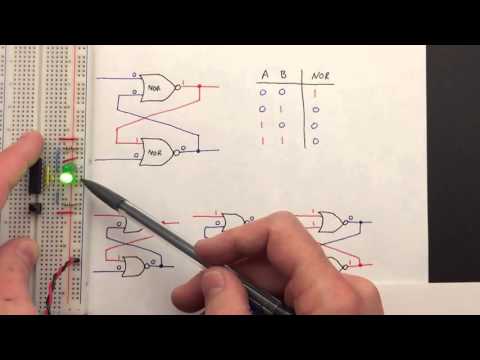
Ben Eater builds an SR latch from NOR gates on a breadboard and shows how feedback holds a state; people copy it when learning sequential logic.
Ben Eater builds a JK flip-flop and uses an RC edge detector to shorten the clock pulse; cited in questions about that capacitor and master-slave designs.
Opens Ben Eater's digital electronics series by varying the voltage across an LED to show its forward voltage and current behaviour; suggested to beginners puzzled by LEDs.
Ben Eater explains binary addition and builds a 4-bit adder from logic gates on a breadboard; suggested to people asking how a processor physically does arithmetic.
A clock circuit for a homebrew 8-bit computer built from a 555 timer and logic gates, often copied by learners who then need help debugging it.
Ben Eater builds the 74LS189 RAM module for his 8-bit computer; often cited in questions about the chip heating and LEDs driven without resistors.