1 EEVblog #279 - How NOT To Blow Up Your Oscilloscope!
Widely cited explanation of why oscilloscope grounds are tied to earth and how careless probing of mains or earthed circuits can destroy the scope.
Channel
104 recommended videos. Channel on YouTube
Widely cited explanation of why oscilloscope grounds are tied to earth and how careless probing of mains or earthed circuits can destroy the scope.
Dave Jones explains why decoupling capacitors are needed, how parasitics limit them, and why mixing values in parallel is not as simple as adding capacitance.
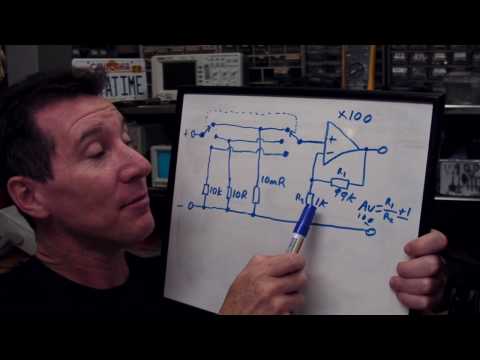
Dave Jones's long introduction to op-amps covering the basic rules, virtual ground, common configurations and part selection; recommended to learners who found textbook treatments hard going.
First part of Dave Jones's soldering tutorial series, covering irons, tips, solder and technique; often named as the one soldering guide a newcomer needs.
Dave Jones presents a low part count soft latching power switch built around a P-channel MOSFET and push button; hobbyists use it as a starting point for one-button power control.
Demonstrates a microcontroller running through the protection diodes on its I/O pins with the supply pin disconnected; cited whenever a supposedly unpowered chip keeps working.
First part of Dave Jones's series designing a lab power supply with op-amp voltage and current regulation; recommended as an introduction to bench supply design.
Part two of Dave Jones's soldering tutorial covers through-hole technique on plated boards; frequently recommended to beginners alongside parts one and three.
Dave Jones runs through the equipment a hobby electronics lab needs, often recommended to people choosing a first oscilloscope or kitting out a bench.
Dave Jones measures how much solder over exposed traces lowers resistance, finding roughly a 50 percent cut on 1 oz copper; cited for high current PCB traces.
Dave Jones tears down a counterfeit Apple USB charger and shows its poor mains isolation; cited in discussions of cheap chargers and the shock risk they carry.
Dave Jones explains how lithium-ion and lithium-polymer cells are charged, including the constant-current and constant-voltage stages, for people building or choosing a charger.
Dave Jones walks through designing a switch-mode supply around the MC34063, often pointed to as a hands-on introduction to buck and boost converters.
Dave Jones builds a constant current dummy load from an op-amp, MOSFET and shunt resistor for testing supplies and batteries; a common starting design for DIY loads.
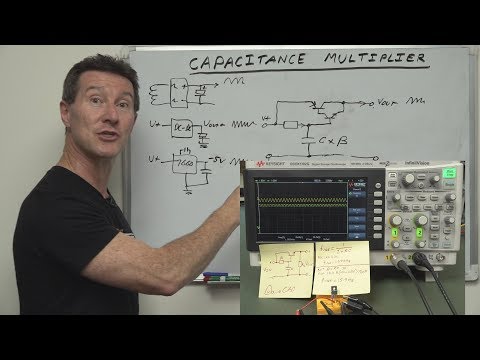
Dave Jones shows that linear regulators reject little high frequency ripple and demonstrates a capacitance multiplier as a cheap fix; a regular link in ripple filtering questions.
Dave Jones's long tutorial on surface mount soldering by hand, hot air and paste, recommended before attempting small packages.
Dave Jones compares budget multimeters around fifty dollars and settles on the Extech EX330, a common pointer for a first meter.
First part of Dave Jones's PCB design for manufacture tutorial, full of practical tips such as solder mask pullback; usually recommended with part 2 for automated assembly.
Dave Jones visualises bypass capacitor behaviour; usually linked alongside his bypass tutorial when people ask how to choose values and place decoupling capacitors.
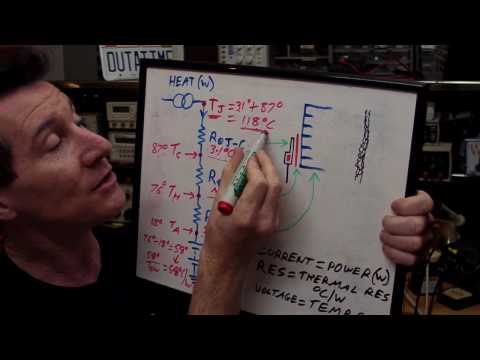
Dave Jones's tutorial on calculating thermal resistance and sizing a heatsink, routinely linked when someone asks how hot a regulator or transistor will run.
Dave Jones's multimeter buying guide; dated in its specific models but still recommended for the features and safety points that matter when choosing a meter.
Dave Jones explains how passive x1 scope probes work and why their bandwidth is far lower than x10; cited when fast signals look wrong through a switchable probe.
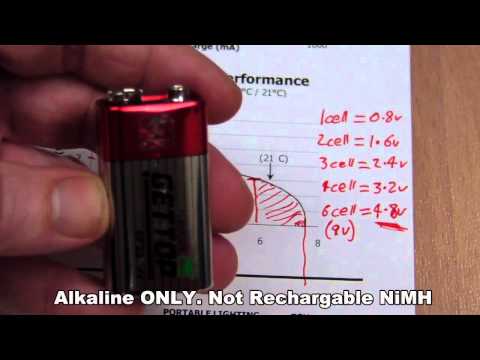
Dave Jones explains what battery capacity ratings mean, how higher discharge current reduces usable capacity and how a high device cut-off voltage wastes charge.
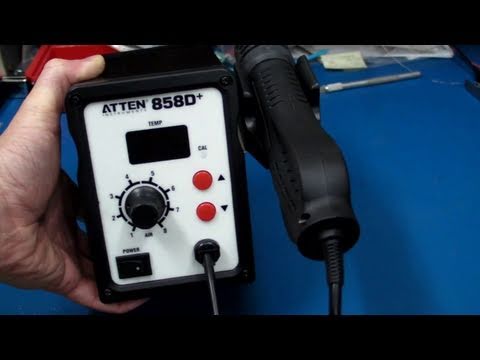
Dave Jones reviews the budget Atten 858D hot air rework station; people cite it when choosing a first hot air tool for SMD work.
Dave Jones builds peak detectors from a simple diode and capacitor up to precision op-amp versions; a frequent reference for envelope and pulse detection projects.
Dave Jones tests anti-static bags, showing pink bags avoid generating charge but do not shield contents from external discharge; cited on ESD storage questions.
Dave Jones tackles whether current flows through a capacitor, explaining charge on the plates and displacement current; a stock answer to beginner questions on how capacitors conduct.
Dave Jones shows how a microcontroller's square-wave output can drive a charge pump to double its supply voltage; suggested when a small higher-voltage rail is needed.
Dave Jones covers measuring power supply ripple and noise with an oscilloscope; a 40 minute episode cited when probing switching converters shows misleading spikes.
Dave Jones's EEVblog series designing a precision bench power supply from scratch, valued for showing a working engineer's reasoning as much as the circuit itself.
Dave Jones captures an infrared remote's signal on a scope and reproduces it with an Arduino, recommended for understanding IR protocols and carrier modulation.
Dave Jones measures the parasitic capacitance between solderless breadboard rows, cited when stray picofarads upset crystals, small capacitors or fast circuits.
Often shared with newcomers asking what to buy for a first electronics bench, with the usual caveat that not everything listed is essential.
Dave Jones explains how a Cockcroft-Walton voltage multiplier works stage by stage; answerers link it instead of writing the explanation out again.
Dave Jones explains why designers use several electrolytic capacitors in parallel instead of one large one, mainly to lower ESR and spread the load.
Dave Jones explains the basics of driving a bare segment LCD from simple IO pins, recommended to people who have wired one up as if it were an LED display.
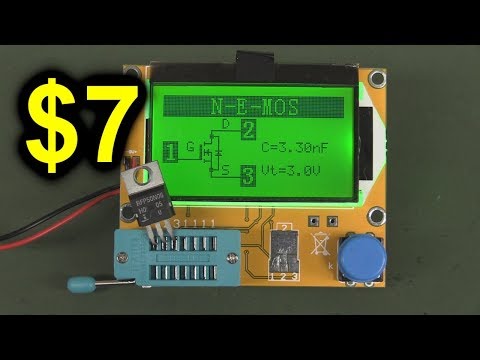
Dave Jones tests a cheap LCR and component tester; suggested to people who need to identify unmarked parts or check a transistor quickly.
Dave Jones walks through designing and ordering a custom multiplexed LCD for his bench supply project; recommended to anyone weighing up a custom display.
Dave Jones works through the design of the uCurrent, cited for his comparison of three ways to generate a negative supply rail for an op-amp.
Dave Jones looks at a microcontroller costing about three cents; linked in threads on picking tiny, cheap parts and on splitting a job across several small chips.
An EEVblog demonstration of dead bug soldering a tiny surface mount chip, offered as a workable technique for prototyping such packages, with warnings that it needs skill.
A multimeter comparison in the hundred dollar bracket, recommended to buyers who want to know which features matter before choosing a meter.
The EEVblog review of the Rigol DS1054Z, linked whenever someone asks which first oscilloscope to buy and wants to see its features demonstrated.
Dave Jones designs a Li-ion battery gauge with the LM3914 and works through the resistor values with Ohm's law; recommended for seeing the design process.
A cautionary tale about a multimeter failing on mains voltage, shared to stress why meter input protection and ratings matter.
Dave Jones explains why digital oscilloscopes look noisier than analogue ones, often linked when a new scope's trace looks fuzzy or someone claims analogue has infinite resolution.
Dave Jones explains decibels for engineers, including dBm, and is the standard link when someone asks why dB is used for signal-to-noise ratios and Bode plots.
Dave Jones explains how segment LCD panels work and are driven, useful when reverse engineering or repairing a bare display.
An older EEVblog video blowing up electrolytic capacitors, linked to show what happens when polarity is reversed and why it matters for safety.
Dave Jones reviewing a cheap Aneng multimeter, used to reassure beginners that a budget meter is fine for low voltage hobby work and to explain its limits.
Cited as an EEVblog reference on how battery voltage relates to remaining energy and the cutoff voltage at which devices stop working.
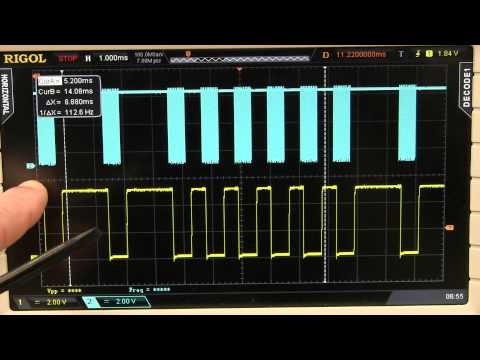
Part four of Dave Jones's lab power supply series covers PWM control filtered to an analogue voltage; also cited for spotting probing artefacts on a scope.
Part three of Dave Jones's EEVblog series on designing and ordering a custom LCD, following the project through to receiving and testing the finished units.
Dave Jones tests an initial production batch of boards; cited for test traces brought out to the panel edge for functional testing before depanelling.
Dave Jones shows automated testing of PCBs while still panelised, cited for test points and for traces routed across snap-off tabs.
Dave Jones explains op-amp input bias current and the offset it creates across input resistors, linked when an amplifier's output sits away from the calculated value.
Part two of Dave Jones's design for manufacture series, recommended to anyone taking a prototype to a production PCB.
Dave Jones explains PCB spark gaps; cited in discussions of spark gaps and gas discharge tubes as protection against high-voltage transients.
Dave Jones revisits a discrete-logic digital clock he designed years ago, useful for understanding mains-frequency timekeeping and old-school logic design.
Dave Jones's reply to the Veritasium electricity video, used in debates about how energy travels along wires and when transmission line thinking actually matters.
Dave Jones works out how to drive a vacuum fluorescent display bought from eBay, useful for anyone reverse engineering one without documentation.
Dave Jones tests whether bypass capacitors matter in practice, usually linked alongside his companion decoupling tutorials when questions about choosing decoupling capacitors come up.
Dave Jones' EEVblog explainer on how bipolar transistors actually work at the junction level, often handed to beginners puzzled by the basic NPN picture.
Dave Jones's review of the Rigol DS1054Z, regularly cited when someone asks which entry-level oscilloscope is worth buying.
An EEVblog video demonstrating audible whine from ceramic capacitors, linked when people ask why a circuit board is making a high pitched noise.
Dave Jones demonstrates how ceramic capacitor value falls under DC bias, cited whenever someone asks about swapping or uprating capacitors.
Dave Jones shows the voltage spike an inductor or relay coil produces when switched off, which explains why flyback diodes are fitted across coils and motors.
Dave Jones builds a 555-based PWM LED dimmer, used as a worked example of timer circuits, steering diodes and duty cycle control.
A soldering tutorial playlist recommended for learning technique, including surface-mount work and packages with a thermal pad underneath.
Dave Jones laying out a real power supply board, often named as the main video to watch for PCB layout best practice once a schematic exists.
The EEVblog Fundamentals Friday playlist, recommended as a way to pick up core electronics theory from Dave Jones.
An EEVblog look at cheap Yihua soldering stations, generally cited as evidence that these Hakko clones are adequate for beginners and light use.
Dave Jones' walk through a professional PCB factory, used to show how boards are etched, masked and silkscreened in practice.
Dave Jones shows how to charge Li-ion and LiPo cells from a bench supply using constant current then constant voltage; followed by people charging single 18650 cells.
Part of Dave Jones's fundamentals tutorials, recommended for learning to work through mesh and loop circuit analysis step by step.
An EEVblog teardown of a Rigol oscilloscope, cited for details of its internals such as the switching supply, relay count and build quality.
An EEVblog review of the Korad KA3005P bench supply that found faulty output transistors, cited in discussions of cheap programmable supplies.
Dave Jones's EEVblog review of the Quick 861DW hot air station, cited when people recommend it as a good value rework tool.
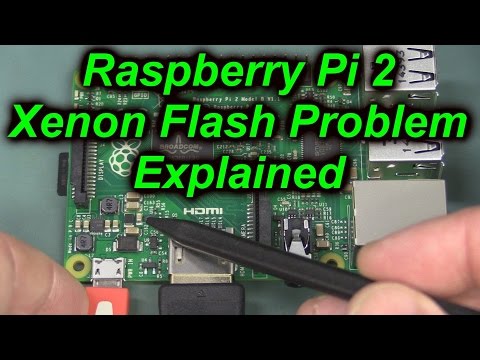
Dave Jones explains why a camera flash can reset a Raspberry Pi 2, linked whenever the photoflash reboot quirk comes up.
Dave Jones works through a remote control hack, covering IR carrier signalling and how button matrices work, recommended before building your own IR project.
Dave Jones on getting heat out of surface mount parts through the board, recommended for understanding thermal resistance and the electrical analogy for heat flow.
An EEVblog teardown of a programmable bench power supply, cited for its remote interfaces and a note on tinned exposed traces for current.
Dave Jones explains chopper and auto-zero op-amp techniques and why they suit low offset current measurement, cited as the usual primer on the topic.
Offered as a dedicated playlist for learning how op-amps work and how to use them in circuits.
Dave Jones tears down a Hakko FX-888 soldering iron and modifies its indicator LED, giving a look at build quality along the way.
EEVblog's Dave argues that beginners should pick up a cheap second-hand analogue oscilloscope, a view often cited when people ask what scope to buy.
Opens EEVblog's six part conversation with Doug Ford on microphone design, recommended as a chance to hear a seasoned analogue designer reason through trade offs.
Dave Jones works through designing a constant current source, offered as inspiration and possible help for anyone building their own.
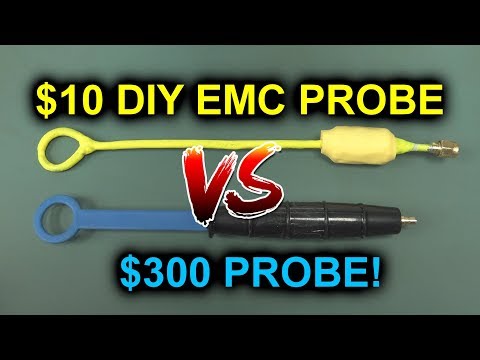
Dave from EEVblog shows how to make a cheap magnetic field probe from a short coil and use it to hunt down EMI sources on a board.
Dave Jones explains the layers of input protection inside a multimeter, including HRC fuses and shielding; often cited when someone asks whether a mistake has damaged their meter.
Hidden gemDave Jones explains switch and relay contact bounce and the hardware and software ways to debounce it; recommended when microcontroller interrupts misfire on noisy inputs.
EEVblog's look at reflowing boards in a converted toaster oven, cited both for the method and for how poorly ordinary oven thermostats hold temperature.
EEVblog's walkthrough of unlocking a Rigol DS1052E to 100MHz bandwidth, cited when people weigh up which budget oscilloscope to buy.
An EEVblog explainer recommended for understanding what Peltier modules can and cannot do, both as coolers and as small thermoelectric generators.
A case for learning electronics fundamentals properly before diving in, recommended to reset a newcomer's outlook on the basics.
EEVblog measurement of many resistors showing how their values cluster, cited in debates about combining parts to improve precision.
EEVblog test of anti-static bag resistance, cited to show that such bags barely conduct, contrary to common assumption.
Dave Jones tours an analogue TV transmission facility; recommended as an eye-opener on how complex high-power RF gets, including rigid coaxial line.
Cited when people explain how multimeter resolution is specified, covering the difference between digit ratings and display counts.
Dave from EEVblog builds a discrete 555 timer kit, linked as an entertaining example of how the chip works from components.
Dave Jones demonstrates how to identify and track down common mode noise; pointed to when scope readings of small signals look swamped by interference.
An EEVblog demonstration of op-amp gain bandwidth product, showing how cascading stages can extend bandwidth, cited to settle theory questions.
An EEVblog repair of a fire damaged power supply board, linked to show both how a small capacitor can fail and how charred board material is removed.
EEVblog tears down the Rigol DS1052E oscilloscope, cited for what it reveals about the hardware, including the overclocked ADC parts inside.