1 Using an EEPROM to replace combinational logic
Ben Eater programs a parallel EEPROM by hand and uses it as a lookup table to drive a seven-segment display in place of discrete logic.
Topic
10 videos. Ranked by independent recommendations, not by views.
Ben Eater programs a parallel EEPROM by hand and uses it as a lookup table to drive a seven-segment display in place of discrete logic.
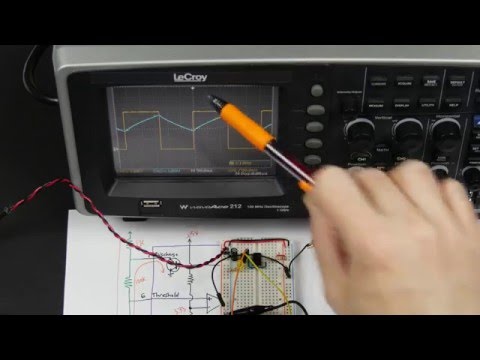
Ben Eater explains the inner workings of the 555 timer and builds an adjustable astable clock for his 8-bit computer; popular with beginners following along on breadboards.
Ben Eater builds a JK flip-flop and shows why it works only intermittently because of a race condition, cited to settle questions about his earlier latch schematic.
First of three parts on control logic for Ben Eater's 8-bit computer, showing how control lines and microcode steps execute an instruction over several clock cycles.
Part of Ben Eater's breadboard 8-bit computer, testing the register module with LEDs on the bus; often cited when builders hit marginal logic levels.
An episode from an 8-bit computer build series, explaining how a 555 timer provides the clock and handles debouncing, praised for laying out the theory clearly.
Ben Eater builds an Arduino Nano programmer for AT28C parallel EEPROMs, using shift registers for the address lines; people build it for their own projects.
Part of Ben Eater's 8 bit computer series, this one builds a register from D flip flops and is cited in questions about registers and RAM.
A clock circuit for a homebrew 8-bit computer built from a 555 timer and logic gates, often copied by learners who then need help debugging it.
Ben Eater builds the 74LS189 RAM module for his 8-bit computer; often cited in questions about the chip heating and LEDs driven without resistors.