1 EEVblog #183 - Soldering Tutorial Part 2
Part two of Dave Jones's soldering tutorial covers through-hole technique on plated boards; frequently recommended to beginners alongside parts one and three.
Topic
44 videos. Ranked by independent recommendations, not by views.
Part two of Dave Jones's soldering tutorial covers through-hole technique on plated boards; frequently recommended to beginners alongside parts one and three.
Dave Jones shows how a microcontroller's square-wave output can drive a charge pump to double its supply voltage; suggested when a small higher-voltage rail is needed.
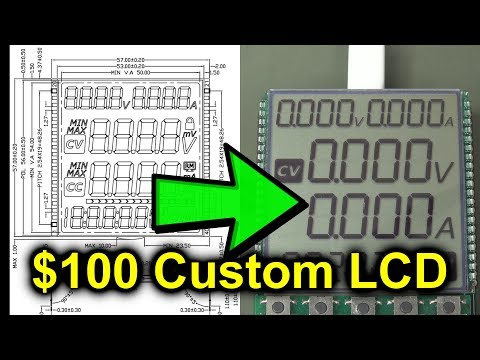
Dave Jones explains how segment LCD panels work and are driven, useful when reverse engineering or repairing a bare display.
An older EEVblog video blowing up electrolytic capacitors, linked to show what happens when polarity is reversed and why it matters for safety.
Dave Jones reviewing a cheap Aneng multimeter, used to reassure beginners that a budget meter is fine for low voltage hobby work and to explain its limits.
Cited as an EEVblog reference on how battery voltage relates to remaining energy and the cutoff voltage at which devices stop working.
Part three of Dave Jones's EEVblog series on designing and ordering a custom LCD, following the project through to receiving and testing the finished units.
Dave Jones tests an initial production batch of boards; cited for test traces brought out to the panel edge for functional testing before depanelling.
Dave Jones explains PCB spark gaps; cited in discussions of spark gaps and gas discharge tubes as protection against high-voltage transients.
Dave Jones revisits a discrete-logic digital clock he designed years ago, useful for understanding mains-frequency timekeeping and old-school logic design.
Dave Jones's reply to the Veritasium electricity video, used in debates about how energy travels along wires and when transmission line thinking actually matters.
Dave Jones works out how to drive a vacuum fluorescent display bought from eBay, useful for anyone reverse engineering one without documentation.
Dave Jones tests whether bypass capacitors matter in practice, usually linked alongside his companion decoupling tutorials when questions about choosing decoupling capacitors come up.
Dave Jones's review of the Rigol DS1054Z, regularly cited when someone asks which entry-level oscilloscope is worth buying.
An EEVblog video demonstrating audible whine from ceramic capacitors, linked when people ask why a circuit board is making a high pitched noise.
Dave Jones demonstrates how ceramic capacitor value falls under DC bias, cited whenever someone asks about swapping or uprating capacitors.
Dave Jones builds a 555-based PWM LED dimmer, used as a worked example of timer circuits, steering diodes and duty cycle control.
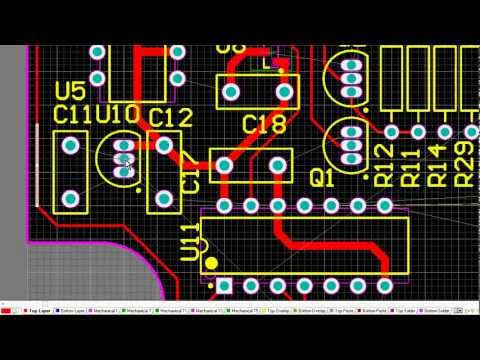
Dave Jones laying out a real power supply board, often named as the main video to watch for PCB layout best practice once a schematic exists.
The EEVblog Fundamentals Friday playlist, recommended as a way to pick up core electronics theory from Dave Jones.
An EEVblog look at cheap Yihua soldering stations, generally cited as evidence that these Hakko clones are adequate for beginners and light use.
Dave Jones' walk through a professional PCB factory, used to show how boards are etched, masked and silkscreened in practice.
An EEVblog teardown of a Rigol oscilloscope, cited for details of its internals such as the switching supply, relay count and build quality.
An EEVblog review of the Korad KA3005P bench supply that found faulty output transistors, cited in discussions of cheap programmable supplies.
Dave Jones's EEVblog review of the Quick 861DW hot air station, cited when people recommend it as a good value rework tool.
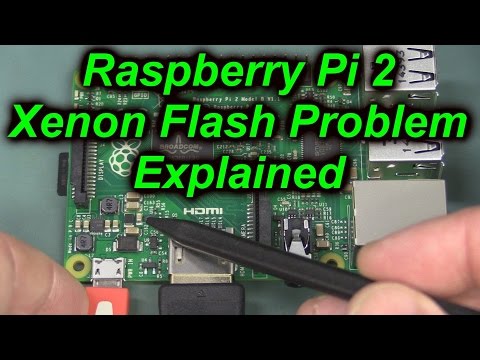
Dave Jones explains why a camera flash can reset a Raspberry Pi 2, linked whenever the photoflash reboot quirk comes up.
Dave Jones works through a remote control hack, covering IR carrier signalling and how button matrices work, recommended before building your own IR project.
Dave Jones on getting heat out of surface mount parts through the board, recommended for understanding thermal resistance and the electrical analogy for heat flow.
An EEVblog teardown of a programmable bench power supply, cited for its remote interfaces and a note on tinned exposed traces for current.
Dave Jones explains chopper and auto-zero op-amp techniques and why they suit low offset current measurement, cited as the usual primer on the topic.
Dave Jones tears down a Hakko FX-888 soldering iron and modifies its indicator LED, giving a look at build quality along the way.
EEVblog's Dave argues that beginners should pick up a cheap second-hand analogue oscilloscope, a view often cited when people ask what scope to buy.
Opens EEVblog's six part conversation with Doug Ford on microphone design, recommended as a chance to hear a seasoned analogue designer reason through trade offs.
Dave Jones works through designing a constant current source, offered as inspiration and possible help for anyone building their own.
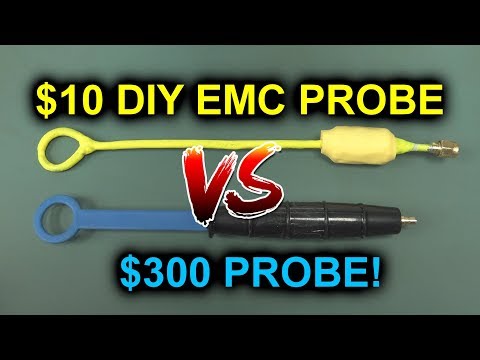
Dave from EEVblog shows how to make a cheap magnetic field probe from a short coil and use it to hunt down EMI sources on a board.
EEVblog's look at reflowing boards in a converted toaster oven, cited both for the method and for how poorly ordinary oven thermostats hold temperature.
EEVblog's walkthrough of unlocking a Rigol DS1052E to 100MHz bandwidth, cited when people weigh up which budget oscilloscope to buy.
An EEVblog explainer recommended for understanding what Peltier modules can and cannot do, both as coolers and as small thermoelectric generators.
EEVblog measurement of many resistors showing how their values cluster, cited in debates about combining parts to improve precision.
EEVblog test of anti-static bag resistance, cited to show that such bags barely conduct, contrary to common assumption.
Dave Jones tours an analogue TV transmission facility; recommended as an eye-opener on how complex high-power RF gets, including rigid coaxial line.
Dave from EEVblog builds a discrete 555 timer kit, linked as an entertaining example of how the chip works from components.
An EEVblog demonstration of op-amp gain bandwidth product, showing how cascading stages can extend bandwidth, cited to settle theory questions.
An EEVblog repair of a fire damaged power supply board, linked to show both how a small capacitor can fail and how charred board material is removed.
EEVblog tears down the Rigol DS1052E oscilloscope, cited for what it reveals about the hardware, including the overclocked ADC parts inside.