1 EEVblog #279 - How NOT To Blow Up Your Oscilloscope!
Widely cited explanation of why oscilloscope grounds are tied to earth and how careless probing of mains or earthed circuits can destroy the scope.
Topic
32 videos. Ranked by independent recommendations, not by views.
Widely cited explanation of why oscilloscope grounds are tied to earth and how careless probing of mains or earthed circuits can destroy the scope.
Dave Jones runs through the equipment a hobby electronics lab needs, often recommended to people choosing a first oscilloscope or kitting out a bench.
Dave Jones compares budget multimeters around fifty dollars and settles on the Extech EX330, a common pointer for a first meter.
Dave Jones's multimeter buying guide; dated in its specific models but still recommended for the features and safety points that matter when choosing a meter.
Recommended as a first stop for anyone unsure how to use a multimeter safely, and as part of a wider electronics basics series.
Dave Jones's EEVblog series designing a precision bench power supply from scratch, valued for showing a working engineer's reasoning as much as the circuit itself.
Often shared with newcomers asking what to buy for a first electronics bench, with the usual caveat that not everything listed is essential.
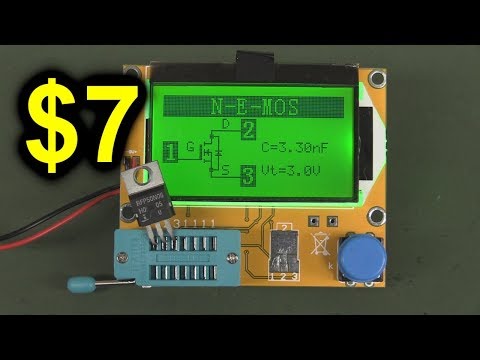
Dave Jones tests a cheap LCR and component tester; suggested to people who need to identify unmarked parts or check a transistor quickly.
A multimeter comparison in the hundred dollar bracket, recommended to buyers who want to know which features matter before choosing a meter.
The EEVblog review of the Rigol DS1054Z, linked whenever someone asks which first oscilloscope to buy and wants to see its features demonstrated.
A Fluke sales video testing several multimeters, almost always linked at one timestamp as a caution against buying too cheap a meter.
Linked to explain measuring current with a multimeter, covering why the meter sits in series and why the red probe moves socket; one viewer rated it only adequate.
A w2aew explainer on how 1x and 10x oscilloscope probes differ, why the attenuation matters and how probe capacitance affects measurements.
A cautionary tale about a multimeter failing on mains voltage, shared to stress why meter input protection and ratings matter.
Shows how to measure capacitance and inductance using an oscilloscope and a cheap pulse generator with fast edges built from a Schmitt trigger inverter.
Dave Jones reviewing a cheap Aneng multimeter, used to reassure beginners that a budget meter is fine for low voltage hobby work and to explain its limits.
Dave Jones's review of the Rigol DS1054Z, regularly cited when someone asks which entry-level oscilloscope is worth buying.
Posted repeatedly to show beginners how a multimeter must sit in series, not across the load, when reading current.
Regularly linked to explain why a meter on its current range reads low in low voltage circuits, because of its own internal resistance.
An EEVblog teardown of a Rigol oscilloscope, cited for details of its internals such as the switching supply, relay count and build quality.
An EEVblog review of the Korad KA3005P bench supply that found faulty output transistors, cited in discussions of cheap programmable supplies.
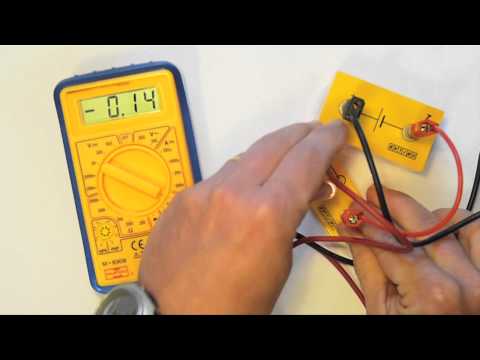
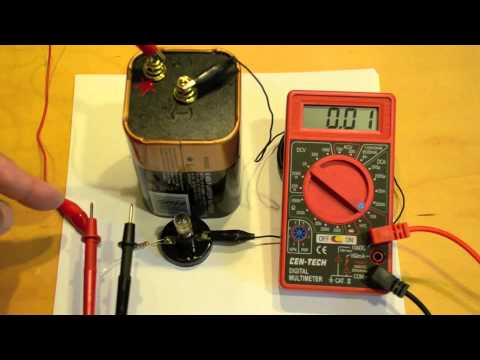
Pointed to as a basic demonstration of measuring current with a multimeter, placing the meter in series so you can read a load's actual draw.
A playlist of oscilloscope tutorials from a presenter regarded as the go-to teacher on scopes, covering the basics that apply to cheap and serious instruments alike.
A spectrum analyser teardown linked for one memorable section where unusual RF construction baffles even the presenter.
A detailed look inside a 100 GHz LeCroy oscilloscope, showing how the front end splits and down-converts the signal, enjoyed as exotic test gear.
EEVblog's Dave argues that beginners should pick up a cheap second-hand analogue oscilloscope, a view often cited when people ask what scope to buy.
Shows how a signal generator plus a scope set to XY display can plot a diode curve without expensive equipment.
Dave Jones explains the layers of input protection inside a multimeter, including HRC fuses and shielding; often cited when someone asks whether a mistake has damaged their meter.
Hidden gemEEVblog's walkthrough of unlocking a Rigol DS1052E to 100MHz bandwidth, cited when people weigh up which budget oscilloscope to buy.
Cited when people explain how multimeter resolution is specified, covering the difference between digit ratings and display counts.
Andreas Spiess compares tools for measuring tiny and pulsed currents, from the Nordic Power Profiler Kit II to the Joulescope; recommended when a multimeter misses ESP32 current spikes.
EEVblog tears down the Rigol DS1052E oscilloscope, cited for what it reveals about the hardware, including the overclocked ADC parts inside.